
Understanding Agrivoltaics
What Becomes Possible When Agriculture and Energy Share the Same Land?
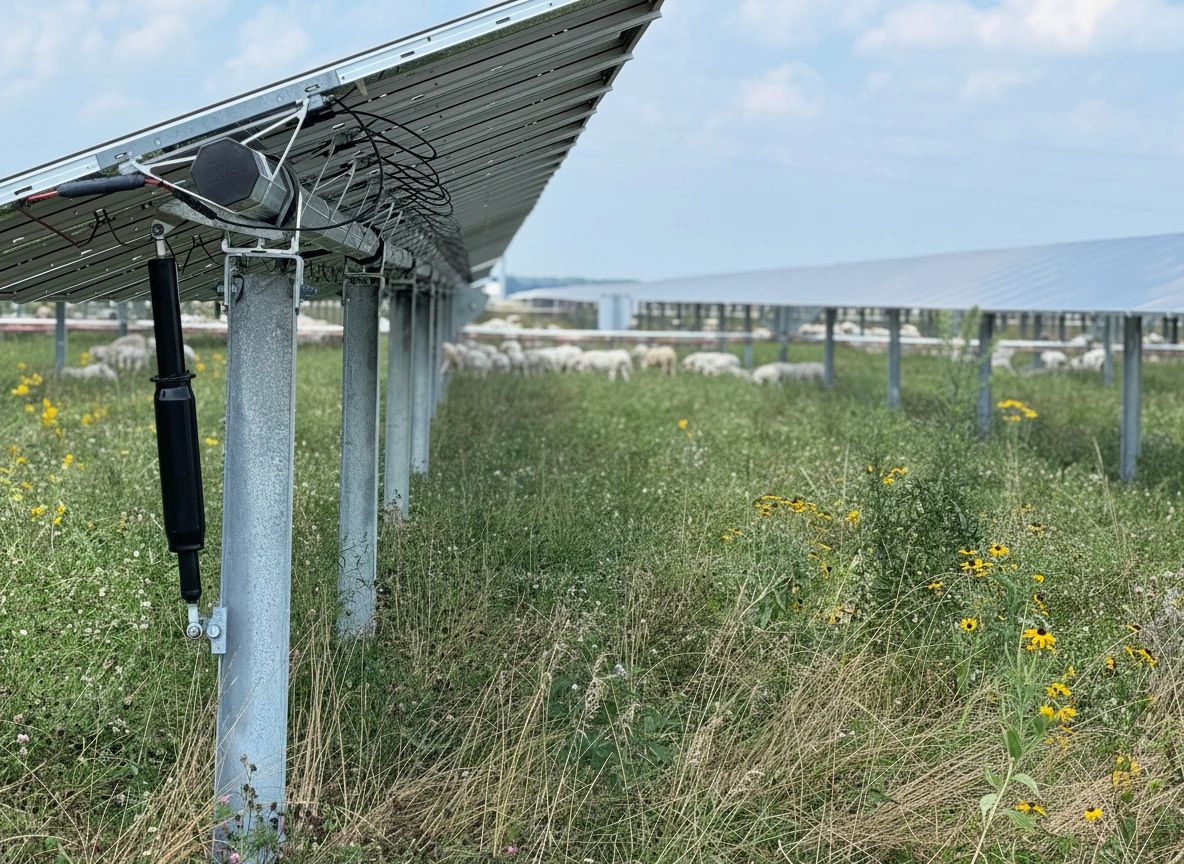
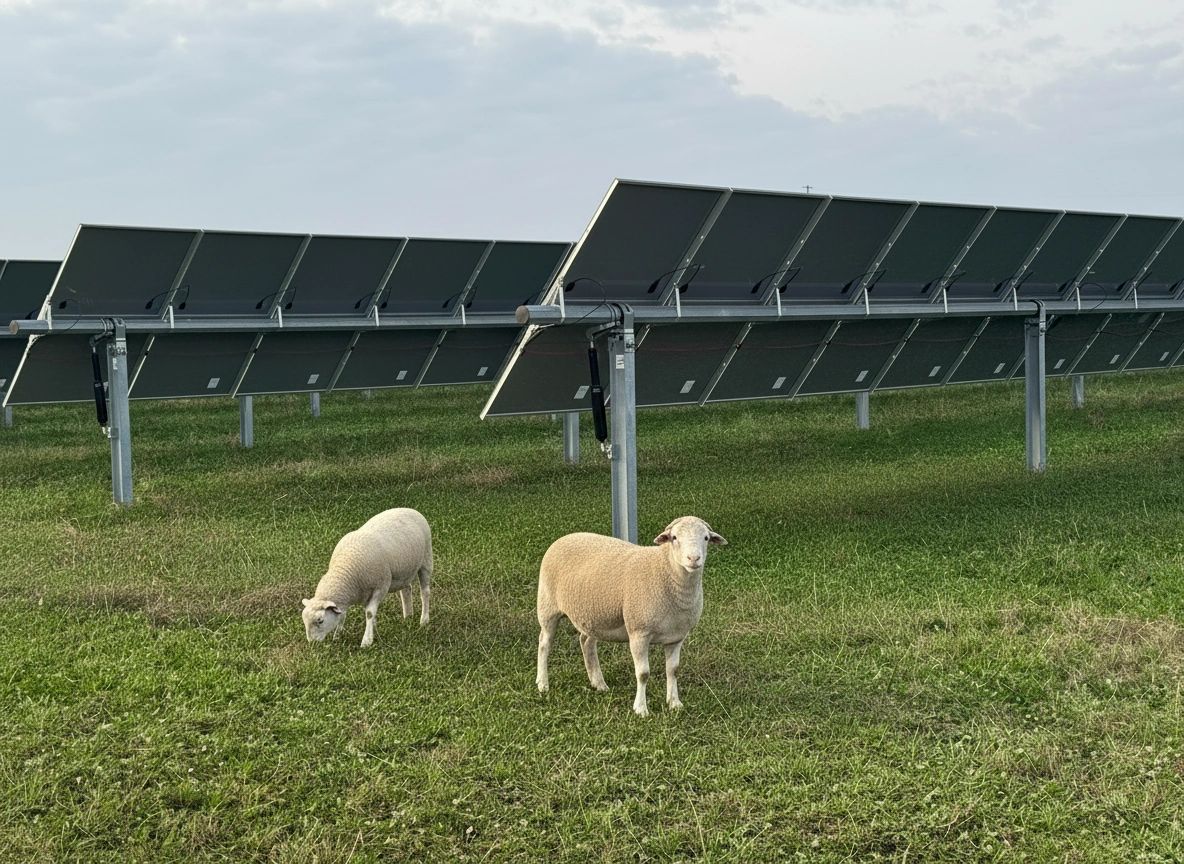
Agrivoltaics is the practice of integrating agricultural production and solar energy generation on the same land. Rather than choosing between food production and energy production, agrivoltaic systems explore ways to support both simultaneously.
A Framework, Not a Formula
Agrivoltaics is not a single practice.
It is a framework that allows agricultural production to continue while creating new opportunities for farmers, landowners, and rural communities.
The specific configuration (panel height, crop selection, grazing integration, habitat design) varies by site, by farm operation, and by the goals of the landowner. What remains constant is the underlying principle: land that generates solar energy can also remain in active agricultural use.
This is not a compromise between farming and energy. It is a design challenge that requires collaboration across agriculture, energy, research, markets, and rural communities. MAC exists to advance that work across the Midwest.
OUR FOCUS
Looking Beyond the Farm Gate
Agrivoltaics is often discussed through the lens of what happens in the field. While agricultural production remains central to these systems, MAC believes the future of agrivoltaics will also be shaped by the broader networks that connect farms to communities, markets, and consumers.
Our work explores the relationships, opportunities, and systems that exist beyond the farm gate, helping stakeholders better understand how agrivoltaics intersects with food systems, rural development, supply chains, conservation, and market adoption.
By bringing together diverse perspectives from across industries, MAC creates space for shared learning, collaboration, and exploration of the factors that will influence long-term success.
Food Systems
Understanding how agrivoltaic production connects to existing agricultural markets and value chains.Rural Communities
Exploring the role agrivoltaics can play in supporting local economies, land stewardship, and community resilience.Markets & Consumers
Examining how consumer awareness, market demand, and purchasing decisions may influence adoption.Conservation & Stewardship
Exploring opportunities to align agricultural production, environmental outcomes, and long-term land management goals.Cross-Industry Collaboration
Convening stakeholders from across sectors to identify opportunities, challenges, and emerging pathways for growth.Why It Matters
Not because solar needs land. Because farmers face real challenges.
The case for agrivoltaics isn't built on energy policy alone. It's built on the conditions facing farm families across the Midwest and the recognition that those conditions require new tools, new income streams, and new ways of thinking about what land can do.
Different farms face different challenges. Agrivoltaics doesn't solve all of them. But for the right operation, on the right land, with the right system design, it can change the math in meaningful ways.

Change is Inevitable.
Progress is Intentional.
American farmers have spent generations adapting to change, solving problems, and providing the resources we all depend on.
As new opportunities emerge, the challenge is not whether farmers can adapt. It is whether the systems that support their success will evolve alongside them.
MAC brings together the people, perspectives, and partnerships needed to explore that future, one where agriculture, energy, and rural communities continue working together to create value for generations to come.